David Furman, PhD
Professor, Buck Institute for Research on Aging
Director, Stanford 1,000 Immunomes Project
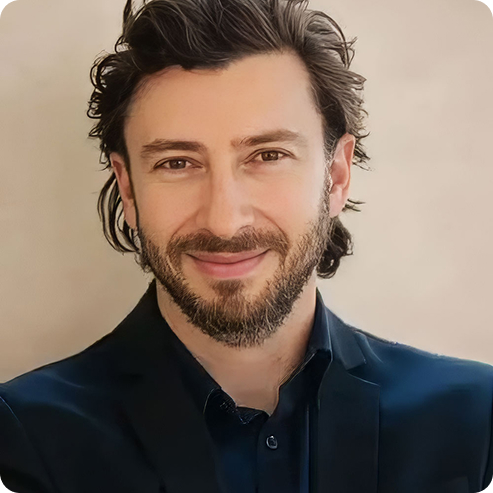
A career spent asking for the evidence
EverSpan Life is built on a premise - that meaningful biological change happens quietly, for years, before standard care has reason to look. That premise is not a marketing position. It was established in the peer-reviewed literature, including a 2019 review in Nature Medicine examining chronic inflammation in the etiology of disease across the lifespan, first-authored by a member of our advisory board.
"Chronic inflammation is silent and invisible, occurring for years before any symptoms appear."Dr. David Furman
What his research examines
Inflammation
Chronic, low-grade inflammation that rises with age in the absence of infection. His work examines how that background signal accumulates over decades, and how it differs from the acute response medicine is trained to recognize.
Biological aging clocks
Models that estimate biological rather than chronological age from immune data. His group published an inflammatory aging clock built with deep learning on a research cohort assembled at Stanford over more than a decade.
Systems immunology
Reading the immune system as one interacting whole rather than one measurement at a time. The 1,000 Immunomes Project gathered longitudinal immune data from over a thousand people to model how that system drifts across a lifetime.
Describes Dr. Furman's research at the Buck Institute and Stanford. Not a description of the EverSpan Life biomarker panel.
Selected publications
-
Chronic inflammation in the etiology of disease across the life span
-
An inflammatory aging clock (iAge) based on deep learning
-
Skin health and biological aging
-
Challenges and recommendations for the translation of biomarkers of aging
In his words
It is the slow, low-grade inflammation that accumulates with age without an infection driving it. It does not announce itself. In the literature we see it rising for years, sometimes decades, before it registers as anything a clinician would have reason to call disease.
Because it is common to so many age-related conditions. Inflammation is never the whole story on its own, but it appears in the etiology of most of the diseases that shorten healthy life. That makes it one of the few processes worth understanding early.
That inflammation is an event. People picture swelling, fever, a sprained ankle. Chronic inflammation is closer to the opposite - a baseline that has shifted. Baselines are only visible if you have measured them more than once.
Wrong is not quite the word - differently scoped is closer. Standard care is built to identify disease once it crosses a threshold, and it does that well. It was never designed to describe the twenty years before the threshold. That has only recently become a clinical question rather than a research one.
A single measurement tells you where a person sits in a distribution. It cannot tell you which direction they are moving. Almost everything interesting in aging biology is a slope, not a point.
Advisory work is where research gets pressure-tested against practice. I am not involved in the care EverSpan Life provides - that sits with its licensed care team. My role is to be a check on how the science is represented.
Appointments and affiliations
Academic
- Professor, Buck Institute for Research on Aging
- Director, 1,000 Immunomes Project, Stanford University School of Medicine
- Institute for Immunity, Transplantation and Infection, Stanford University
Commercial
- Edifice Health
- Cosmica Biosciences
- American Inflammaging Institute
Listed for professional background only. No institution named here endorses EverSpan Life.
Disclosure
Dr. Furman serves on the EverSpan Life Medical & Scientific Advisory Board in a compensated capacity and holds commercial interests in companies working in adjacent fields. Institutional affiliations are listed for professional background only and do not constitute endorsement of EverSpan Life by any institution named.
What this means for your care?
Research like this describes why proactive care is worth doing at all. It does not describe how it is done. That belongs to the EverSpan Life care team - licensed clinicians who read your results over time, in context, and decide with you what is worth doing next.